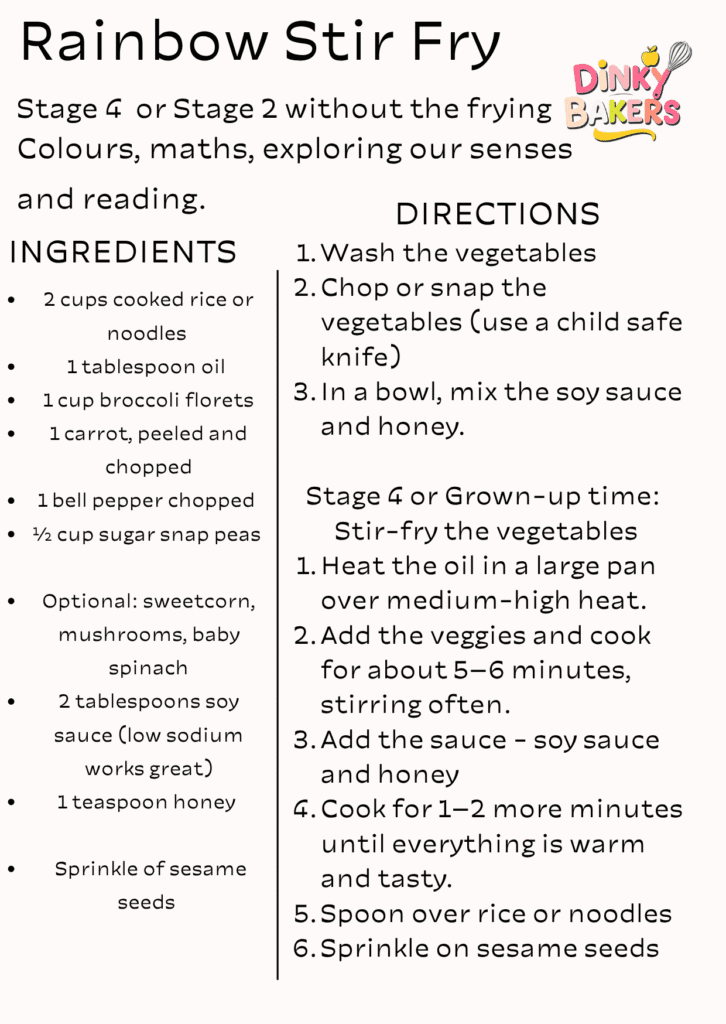
Quick Easy and Educational Rainbow Veggie Stir-Fry for Children
This quick easy and educational rainbow veggie stir fry is a win in the kitchen with children.
Creating a pan full of colour and crunch.
Picking peppers by shade, counting peas and then tasting every bite. This in itself explores the senses, supports maths and explores colours.
This recipe is quick, easy and ready in under 30 minutes.
The other thing I like about this recipe is that you can use everyday ingredients that you already have – peppers, carrots, sweetcorn, broccoli and noodles or rice. It suits busy school nights, tight budgets, and hungry children. The colours help children try new veg without a fight.
There is real learning in the mix. Children can sort the veg by colour, size and texture.
They can practise knife skills with safe cuts, learn heat rules and see how food changes in the pan. They also build reading skills by reading labels, checking the recipe, following steps, and using cooking as a way of learning to read.
We keep the flavour gentle and flexible, with a light soy or tamari base. You will find simple swaps for allergies and taste, plus ideas that let children choose toppings.
They can stir the pan, time the cook and plate by colour. The goal is a plate they helped make, so they want to eat it.
By the end, you will have a fast method, smart prep tips and child friendly tasks.
Expect crisp veg, bright colours, and clean plates.
Why a Rainbow Veggie Stir-Fry is Perfect for Children
A rainbow plate is so pretty.
Each colour signals different nutrients that help children grow, think and stay active.
A quick stir-fry brings those colours together in one pan, with short cooking times to keep crunch, flavour and goodness. It also makes space for simple learning, from reading labels to timing the noodles, so dinner feels like play, not pressure.
For a quick refresher on why fruit and veg matter for kids, see this clear guide from a registered nutritionist: why fruit and vegetables are important for kids.
Health Boosts from Each Colour in the Rainbow
I absolutely love this – each colour brings a different job to the table!
Below is a mini guide that you can use as you shop and chop.
- Red peppers: vitamin C
- Red peppers are rich in vitamin C, which helps the body make collagen for healthy skin and gums. It also supports iron absorption from plant foods, a key point for growing bodies. Light cooking keeps the vitamin C high, so quick stir-frying works well.
- Why it matters: stronger tissues, better wound healing and support for tiredness if iron intake is low.
- Orange carrots: eye health
- Carrots pack beta carotene, which the body turns into vitamin A. Vitamin A supports the surface of the eyes and helps with seeing in low light. A small amount of oil in the pan helps the body use beta carotene.
- Why it matters: clearer vision for reading, drawing, and evening play.
- Yellow squash: digestion
- Yellow squash is gentle, hydrating, and full of fibre. Fibre keeps stools soft and regular, and helps kids feel satisfied after meals. It also brings potassium, which supports normal fluid balance and muscle function.
- Why it matters: calmer tummies and steady energy across the evening.
- Green broccoli: strong bones
- Broccoli offers vitamin K and a useful amount of calcium, a smart pair for bone health. It also contains folate, which supports growth and cell repair. Steam or stir-fry until bright green to keep texture and nutrients.
- Why it matters: sturdy bones and steady growth during busy school weeks.
- Purple cabbage: brain power
- Purple cabbage contains anthocyanins, pigments linked with memory support and cell protection. Keeping it slightly crisp helps preserve these compounds. For a simple overview of purple plant benefits, see this NHS resource on eating a rainbow: Eat a Rainbow.
- Why it matters: sharper focus for homework, reading time, and play.
Tip: Think of the pan as a colour wheel. Rotate colours through the week, not all on one night, if that suits your budget or schedule.
Making Mealtime an Adventure
Children will eat with their eyes first.
Bright colours turn a plate into a puzzle, a picture or a story. That spark of curiosity is often the nudge a cautious eater needs.
Try simple, low-stress ideas that make tasting feel safe and fun:
- The rainbow rule: pick one food from two colours today. Next time, try three.
- Colour match: ask your child to match vegetable to crayon colours. Then taste the “winning” colour.
- Crunch meter: rate each veg from soft to super crunchy.
- Sizzle science: listen to the pan. What changes when the veg hits the heat?
- Paintbox plating: arrange noodles like a nest and “paint” with veg spokes around the edge.
- Tiny tastes: serve micro portions, pea-sized for new foods. Confidence grows bite by bite.
Don’t put the pressure on, do it together and build reading practice into the fun:
- Reading labels: find the word “carrot” on the bag, then count how many are in the recipe.
- Recipe steps: read step 1, then do it and tick the box.
- Cooking as reading: set the timer, read the minutes and call out when to stir.
- Menu makers: let them write a mini menu card or name labels for a seating plan with two colours they choose.
For picky eaters, choice and control are powerful:
- Offer two dips, not ten. For example, soy and yoghurt-lime. Let them choose.
- Use a “no thank you” plate for rejected bites. It reduces pressure and keeps the table calm.
- Keep wins visible. A small sticker chart for “I tried a tiny bite” works better than prizes.
If you want a child-friendly overview that backs up the idea of colour variety, this accessible explainer on veg by colour is handy: Health Benefits Of Each Colour Vegetable.
The goal is simple – let the gorgeous colours lead, keep portions small and use quick wins to build trust.