Pouring and Transferring: How to Build the Skill (Without Flooding Your Kitchen)
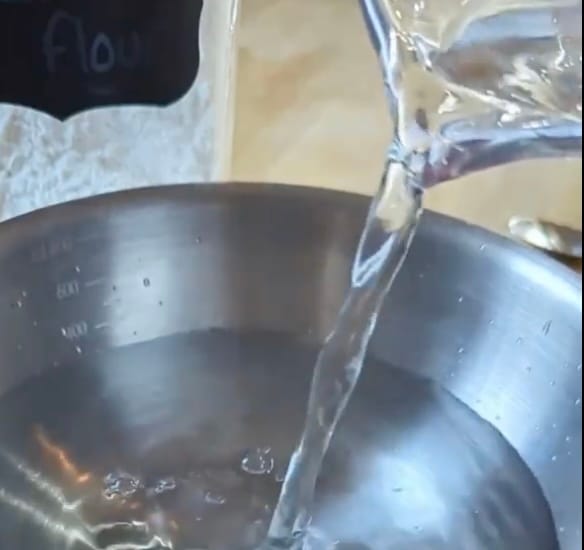
We’ve all been there. Your child wants to pour their own drink. They’re concentrating hard, the jug is wobbling, the cup is wobbling and the next minute the cup’s overflowing. There’s water on the worktop, and you can’t even pick the thing up because it’s so full!
It’s tempting, in those moments, to take the jug back. But honestly? Resist. What looks like a small everyday skill is actually doing huge developmental work. We forget how hard pouring is, because we do it dozens of times a day without thinking. Boiling the kettle, filling a cup, topping up a vase. We take it for granted.
But there is an awful lot going on when a child pours. They’re judging how much liquid to put in. They’re holding the cup and the jug at the same time. They’re gripping the jug, adjusting the strength of that grip depending on how heavy it gets. And they’re coordinating all of that — eyes, hands, wrists — to land the liquid in the right place.
This post will walk you through how to build the skill from the very beginning, with a simple setup, working up through the stages until your child is confidently measuring liquids for a recipe. With tips for keeping the mess manageable along the way.
Why pouring matters more than it looks
Pouring looks like a simple, day-to-day thing. But it’s actually a serious developmental milestone, and if you look at what’s involved, you can see why.
The physical side alone is using both hands together at the same time — what’s called bilateral coordination. One hand holds the handle of the jug. The other holds the container, or steadies the side of the jug. There’s the rotation of the wrist as the jug tips. There’s the strength in the wrist to control that tip — too fast and it floods, too slow and nothing comes out. There’s enough grip in the hand to hold the jug, adjusted for how heavy it is. And the grip has to keep adjusting as the liquid level changes.
🧠 What pouring is actually building (the developmental view)
If you broke down pouring the way an occupational therapist would, you’d find:
- Bilateral coordination — using both hands together but doing different things with each
- Wrist rotation — the controlled tip of the jug
- Hand and wrist strength — gripping firmly but not too hard
- Hand-eye coordination — landing the liquid where you want it
- Proprioception — knowing where the jug is in space without staring at it
- Visual judgement — when to stop, how much is enough
- Self-correction — adjusting the angle mid-pour when needed
That’s not a small list. And it’s all happening while your child is trying to get a drink.
Here’s why this matters even if your child isn’t planning to be a chef: the same muscles and skills that pour a glass of water also hold a pencil with the right pressure. They use scissors. They do up buttons. They tie shoelaces.
Pouring practice is handwriting practice. It’s scissor practice. It’s all the fine motor and bilateral coordination work that makes school easier, disguised as a child wanting their own cup of water.
And, of course, when your child first starts pouring, they’re going to pour water in places that aren’t the bowl or the cup. That’s not failure, that’s exactly what learning looks like. The job here, for us as parents, is to make it okay to make those mistakes while they practise. Because they will keep practising, and they will improve, and one day soon they’ll be pouring milk onto their cereal without spilling a drop. That day is coming. The mess is the path to it.
The Explorer stage — small amounts
When we’re starting on the pouring journey, we genuinely do need to start at the very beginning. It might seem a bit basic, but those first sessions are doing real work, and skipping them is what leads to spilled milk and frustrated children later.
Pick the right jug. Not too heavy — that won’t help until they’ve built up wrist strength and grip. But not too light either, because a jug that’s too flimsy is harder to control. A small jug they can pick up easily is what you’re after.
Fill it halfway. Not to the top. A full jug is heavy, harder to tip with control, and almost guaranteed to spill. Halfway gives them control. They can manage the weight, manage the angle, and feel successful.
Then the activity is simple: pour water from one bowl to another, back and forth. That’s it. Children genuinely love water play, so this isn’t a hard sell. You can put bubbles in one bowl and not in the other to make it more interesting, or use different colours of water with food colouring. Whatever helps.
Two brilliant places to do this:
- The garden, when the weather’s nice. No need to worry about wet floors, it’s outside. Spilling becomes part of the fun rather than a problem.
- The bath. A suitable-sized jug in the bath is genuinely one of the best pouring practice setups there is. They can pour as much as they like. The water just goes back into the bath. No mess, no stress, lots of repetition. And they’re already there every night.
Once they’re confident with bowl-to-bowl, you can move on to pouring from jug to bowl, and from one container to another with different shapes and openings. That’s the Explorer stage — short, repetitive, low-pressure, and genuinely playful. This isn’t a stepping stone you rush through. It can take weeks. That’s fine.
The Helper stage — pouring with real liquids
Once your child is confident moving water between bowls, it’s time to step up to liquids in real situations.
Think: pouring milk onto their own cereal. Pouring milk into a cup for a drink. Pouring milk into pancake batter while you’re cooking together. The pouring skill is now doing real work, it’s not practice any more, it’s life.
You’ll still get spills. Plan for them. Put the cup or bowl onto a baking tray or a tea tray before they pour, so any overflow lands on the tray rather than your worktop. This one tiny adjustment removes most of the stress from the activity.
Use a small jug to start. If you buy your milk in big four-pint cartons (I do — three kids, lots of cereal!), I wouldn’t move them to that until much later. Decant some into a smaller jug instead. If you buy small cartons, your child can try pouring straight from those.
💡 The skill we’re really teaching at this stage
It’s not just getting the milk into the cup — they’ve been doing that with water for weeks. The new skill is knowing when to stop.
You only need so much milk on cereal. You only want a cup three-quarters full, not brimming. That sense of “that’s enough” takes practice and it’s a separate skill from the physical act of pouring.
I used to see this so clearly when I worked as an LSA. At the dinner hall, you could spot which children had perfected pouring and which hadn’t. Some would fill their cup three-quarters full, others would fill it right to the brim. Same equipment, different skill levels, and the brimming children would inevitably spill it walking back to the table.
So the Helper stage is really two skills layered together: the physical pouring (now with a real consequence if it spills) and the judgement of how much is enough. Both take practice, and both transfer to dozens of other moments in life.
The Little Chef stage — measured pouring
At the Little Chef stage, we move from “about right” to accurate measurement. The Helper learnt that you only want a cup three-quarters full. The Little Chef learns that pancakes need exactly 300ml of milk, no more, no less.
This is where the measuring jug becomes the star. Your child needs to learn to:
- Get down to eye level with the jug. Looking from above or below gives you a misleading reading.
- Pour, then check, then adjust. Add a bit more if you’ve underpoured. Tip a bit out if you’ve overpoured. That’s normal cooking.
- Self-correct without frustration. Adjustments aren’t failures — they’re how grown-ups cook too.
That eye-level habit is genuinely worth teaching properly, because it’s the same skill they’ll need in science lessons at secondary school when reading measuring cylinders.
🧮 The maths hiding in measured pouring
Volume is a tricky concept. Up to this point, your child has mostly worked with mass (grams) — flour, sugar, butter on a scale. Volume in millilitres is different, and it can be hard to grasp from a worksheet.
But seeing it physically — watching 300ml of milk fill a measuring jug to a specific line, comparing 100ml to 500ml in the same jug — makes the maths concept of volume click in a way no textbook can.
This is one of those situations where doing the activity does the teaching. You’re not “doing maths” — you’re cooking pancakes. But the maths is going in anyway.
And the self-correcting bit really matters. Sometimes you don’t pour it in correctly first time. That’s not failure, that’s just cooking. The child who learns to look at a 300ml line, see they’ve poured 280ml, and calmly add another splash is a child who’s learning how grown-ups actually work in a kitchen.
Transferring — the underrated sibling skill
Transferring is pouring’s quieter sibling. Same family, different muscles. While pouring is mostly about wrist rotation, transferring is about spoon control and the skills it builds are just as valuable.
The activity is simple. You have two bowls. You give your child a spoon. They scoop something out of one bowl and transfer it to the other. Flour works brilliantly. Rice. Lentils. Dried pasta. Whatever you’ve got.
Here’s why this is fine motor gold:
- It uses a pincer grip — the same grip needed for holding a pencil correctly
- The spoon becomes an extension of the arm — proprioception again
- There are three distinct movements: scoop, move, turn
- Each step needs control — keeping the spoon level, judging the distance, releasing at the right moment
You can also vary it with tongs. Picking up pieces of pasta with tongs and moving them from one bowl to another is brilliant for hand strength and pincer grip. It looks like play, but it’s pure fine motor practice. Exactly the same kind of work an occupational therapist might give a child to help with handwriting.
🥄 Why this transfers (literally) to mealtimes
The skill of scooping flour with a spoon and getting it into another bowl without spilling is the same skill as scooping food into your own mouth. Children who’ve had lots of practice transferring food from bowl to bowl find self-feeding much easier — there’s no extra learning required, the muscle memory is already there.
If you’ve got a child still struggling with self-feeding, transferring practice with a spoon is a brilliant low-pressure way to build the underlying skill. They’re just playing in the kitchen, but they’re also building the muscles and coordination they need at mealtimes.
The setup that makes or breaks it
I cannot stress this enough — good setup makes or breaks pouring practice, especially in the early Explorer and Helper stages. A few small adjustments to how you arrange things will save you hours of frustration and lakes of spilled water.
Here’s what makes the difference:
Get the height right. If your child is reaching up to a worktop, they can’t see what they’re doing properly, and they can’t control the jug from that angle. Either give them a stool or a learning tower to stand on, or move the activity to the kitchen table where they can sit. Or — best of all in summer — take it outside.
Use a tray underneath. An old baking tray, a tea tray, even a folded tea towel. This creates what I call a “pouring zone” — they know all the liquid has to stay inside that area. Spills land on the tray, not the floor. Cleanup is one wipe. The mental load drops massively.
Have a cloth right there. Not in the cupboard, not “I’ll grab it if needed”, actually next to where they’re working. Spills happen quickly. A cloth at arm’s reach means the spill gets wiped up calmly and quickly, with minimal fuss, and the activity continues.
🏗️ The pouring station: a 60-second setup
Before you call your child over, do this:
- Tray on the table or worktop
- Small jug (half full) on the tray
- Two bowls on the tray
- Cloth folded next to the tray
- Stool or learning tower in place if you’re at worktop height
Sixty seconds. That’s all it takes. And it’s the difference between a calm 15 minutes of pouring practice and a stressful 5 minutes that ends with a flooded floor and frustrated everyone.
What to say when they spill
It will happen. There will be spillages, and there’s no way around it. Pouring is genuinely not an easy skill to master at the beginning. So let’s just expect the spills and plan around them.
If you’ve followed the setup advice — small volumes, a tray underneath, a cloth at arm’s reach — most spills are tiny. You wipe it up, you move on. “Oops, never mind, let’s mop that up and try again.” No drama, no big deal. That tone is half the lesson.
Yes, occasionally a whole jug goes on the floor and that’s a bigger job. But even then it can be wiped up. Starting with small volumes really helps minimise that, especially indoors. There’s a reason I keep saying “fill it halfway.” That advice protects you from the worst spills.
The bigger thing here is what you say when it happens. Children are watching us. If we sigh dramatically when they spill water, they learn that spilling is a disaster. If we say “oh, no problem — that’s why we have a cloth”, they learn that mistakes are part of practising, and they keep trying.
Honestly, sometimes I’m the one spilling things. We all do it. It happens. Things can always be wiped up. That message, that mistakes are normal and recoverable, is one of the most valuable things you’ll teach in your kitchen.
How this travels beyond the kitchen
When your child can pour well, the benefits go far beyond your own kitchen. Suddenly, all sorts of everyday situations get easier:
- At breakfast club — pouring their own milk onto cereal without help
- At the school lunch table — filling their cup with water without flooding the tray
- At a friend’s birthday party — pouring their own juice and not needing an adult to step in
- At restaurants — managing the jug of water on the table
And the same is true for transferring with a spoon. Once that skill is solid, mealtimes get easier, packed lunches are smoother, and your child has one less thing to feel uncertain about when they’re out and about.
But the biggest gift this skill gives your child is something quieter: a sense of quiet confidence. They know they can do it. They don’t have to be anxious about it. They don’t have to ask for help every time. That confidence travels with them everywhere.
Some children will pick this up quickly. Others will take longer. That is absolutely fine. This is not a race. Your child will get there as and when they’re ready. Just keep practising, keep it fun, and enjoy the journey.
What your child will have learned
For something as ordinary as pouring water, the developmental work is genuinely substantial:
- Bilateral coordination — using both hands together
- Wrist rotation and wrist strength
- Hand strength and grip control
- Hand-eye coordination
- Proprioception — knowing where their body is in space
- Pincer grip (from the transferring activities) — the foundation of pencil control
- The judgement of “how much is enough” (Helper)
- Reading a measuring jug at eye level (Little Chef)
- Volume in millilitres — a tricky maths concept made concrete
- Self-correction — adjusting mid-activity without frustration
- Resilience around mistakes — that spills happen and can be wiped up
- Quiet confidence in everyday situations outside the home
That’s a lot of work for a small jug and a couple of bowls.
Frequently asked questions
What age should my child be able to pour their own drink?
This is exactly why we use Stages Not Ages at Dinky Bakers — there isn’t a “right” age. Some children are pouring confidently at three. Others aren’t until nine or older. All are completely fine.
What matters is whether they’re getting practice, not what age they hit the milestone.
My child keeps overfilling cups. How do I teach them when to stop?
This is one of those skills that needs lots of low-pressure repetition. A few things that help:
- Use a clear cup so they can see the level rising
- Mark a “stop line” with a sticker or non-toxic pen on the outside
- Use the language — “we want it three-quarters full, like this” and show them with your hands
- Practise pouring small amounts repeatedly — five small pours is better than one big one for learning the judgement
And keep at it. This skill genuinely takes weeks of practice for some children. That’s not slow — that’s normal.
Should I be worried if my child is much messier than other kids the same age?
Probably not. Children develop fine motor skills at very different rates, and pouring/transferring is one of the more complex skills (lots of muscle groups working together). Some children just need more time and more practice.
If you’re genuinely concerned — particularly if your child is struggling with several fine motor skills at once (handwriting, scissors, buttons, cutlery) — speak to your health visitor or GP. An occupational therapist referral can be hugely helpful and there’s no shame in asking. Lots of brilliant, capable children benefit from a bit of OT support.
Can I use kitchen scales instead of a measuring jug for the Little Chef stage?
You can and many recipes do call for liquids in grams. But I’d really recommend doing both. A measuring jug teaches volume visually in a way scales can’t. Your child learns to “see” what 300ml looks like, what 100ml looks like, how they compare. That visual sense of volume is genuinely useful all the way through life.
Scales are great for accuracy. Jugs are great for understanding. Use both.
My child gets frustrated when they spill. How do I help?
The single biggest thing: your reaction sets theirs. If you stay calm and matter-of-fact about spills (“oops, never mind, let’s wipe it up”), they’ll learn to do the same. If you sigh, tut, or tell them off, they’ll learn to be embarrassed about mistakes and they’ll stop trying.
If they’re already in a frustration cycle, take a break and come back to it. Try the bath setup, spilling literally doesn’t matter there, which removes all the pressure. Often the frustration disappears within a couple of sessions of low-stakes practice.
Do I really need a learning tower?
Not necessarily. A sturdy step stool works just as well for most children, and a kitchen table they can sit at is even better at the early stages. The goal is just to get them to the right height — there’s no special magic in a learning tower.
That said, if you’re going to be doing a lot of cooking together long-term, a learning tower is a worthwhile investment because they’re stable, safer than a stool, and your child can stand at the worktop hands-free.
What’s the best first jug to buy?
You probably don’t need to buy anything new. Look for what you already have:
- A small plastic jug from your kitchen cupboard (lightweight, unbreakable)
- A small measuring jug — many homes have them
- A clean, empty plastic bottle with the top cut off
- A small tea/coffee pot if you have one
You want it to be small enough for their hands, light enough when half-full, and ideally with a handle. That’s it. No need for a special “child’s jug” unless you want one.
How does pouring connect to handwriting?
Both skills use the same underlying muscle groups: hand strength, wrist control, bilateral coordination (one hand stabilises the paper while the other writes), and the pincer grip (transferring practice especially builds this).
A child who pours and transfers regularly is doing exactly the kind of fine motor work that makes pencil control easier when they get to school. It’s not optional extra practice, it’s foundational. If your child is struggling with handwriting, more pouring and transferring practice is a brilliant, low-pressure way to build the underlying strength.
Can older children benefit from this if they missed it earlier?
Absolutely. The Stages Not Ages framework specifically exists for this. An eight-year-old who’s nervous about pouring can absolutely start at the Explorer stage with a small jug in the bath, and progress through the stages just like a younger child would.
The only thing to adjust is the framing — older children may feel self-conscious doing “baby” activities, so present it as practice for cooking together (which it genuinely is), rather than as a fine motor exercise.
✨ One thing to try this week
Set up a pouring station tonight. A tray, a small jug filled halfway with water, two bowls, a cloth nearby. Put it on the kitchen table. Let your child play with it for ten minutes while you make dinner.
That’s it. No instructions, no expectations. Just water, jug, bowls, time. That ten minutes is doing more developmental work than most planned activities.