How Cooking Builds Fine Motor Skills in Children
Children cooking in the kitchen can be total chaos. But sometimes, when you stop and watch, you’ll catch a moment that surprises you. A child buttering bread with fierce focus. Lining up slices of banana like tiny coins. Pressing the bread together, cutting it in half, holding it up with a proud grin.
That simple sandwich? Those little fingers have just had a proper workout. Pinching, pressing, spreading, slicing. Every one of those movements is strengthening the small muscles in their hands.
This post is about why cooking is one of the loveliest, most natural ways to build and support fine motor skills in children. And how you can make it part of your week without it feeling like an extra job. Because none of us need that!
What fine motor skills actually are
Fine motor skills are the small, precise movements we make with our hands and fingers every single day. The honest truth is, most of us take them completely for granted. We don’t even think about engaging the muscles that let us do up a button or hold a pen.
But for children, those muscles are still developing. Fingers and thumbs working together to do up zips. Hands controlling a pencil. Two hands coordinating to use scissors. All of it is built on grip strength, hand control and the link between what the eyes see and what the hands do.
The stronger those muscles get, the easier daily life becomes. Opening a lunchbox. Tying laces. Doing up a coat. And yes, eventually writing. But honestly? When children start nursery, pre-school or reception, I’d say being able to get a coat or shoes on independently matters far more than being able to write.
So lets give those fingers a workout. Slowly and gently giving the muscles practice. Confidence grows when hands can do what the mind imagines.
👋 A note from me
I’m a former LSA, not an occupational therapist. If you’re worried about your child’s fine motor development, please do speak to your GP, health visitor or your child’s nursery / school SENCo. For brilliant parent-friendly information from a qualified UK paediatric OT, take a look at Griffin OT — Kim’s blog is full of clear, practical advice.
Why cooking works so well
Cooking is one of the simplest, sneakiest ways to build fine motor skills, because it doesn’t feel like work to your child. It feels like helping. It feels like being trusted. It feels like making something real.
Stirring, pouring, scooping, kneading, tearing herbs, twisting lids, using tongs — every single one of those is a proper hand workout. And the kitchen offers something a worksheet never can: real textures, real weight, and instant feedback. Did the dough hold together? Did the milk go in the cup or on the worktop? Your child sees the result of every movement, straight away.
And here’s the bit that takes the pressure off: cooking with children doesn’t have to mean making something from scratch, beginning to end. Honestly. Some of the best fine motor practice happens when you invite your child to take part in just one step of whatever you’re already doing.
Are you making dinner? Could they tear the herbs? Peel a clove of garlic — there are little gadgets that make this much easier. Pick the stems off the strawberries (without nibbling too many)? Stir the mixture while you grab something from the fridge?
Two minutes of stirring is two minutes of wrist control. That counts.
What this looks like at each stage
This is where Dinky Bakers’ Stages Not Ages framework comes in. Rather than thinking “my child is four, so they should be doing X”. We think about where they are right now, and we match the kitchen task to that, not their age. Here’s what fine motor practice looks like across the three stages.
Building the foundations
At Explorer stage, your child is mostly watching and joining in for short bursts — and that’s exactly right. The fine motor wins here are smaller than you’d think, but they really add up.
- Tearing herbs. Basil, parsley, mint. A lovely pinch-and-pull movement.
- Sprinkling. Cheese onto pasta, herbs onto a pizza, seeds onto yoghurt. This looks simple but it’s beautifully precise.
- Stirring a thick mixture with a chunky spoon — yoghurt, soft batter.
- Washing fruit in a colander and patting it dry.
- Pressing dough or playdough flat with the palm of the hand. The shortbread recipe is a brilliant starter for this.
Strength and coordination
Helper stage is where things get more involved. Your child is starting to use both hands together — one stabilising, one doing the work. That bilateral coordination is huge for school skills like cutting and writing.
- Pouring from a small jug into a cup. Two hands first, then one as confidence grows. Breakfast in a tub is full of pouring practice.
- Spreading butter, jam or hummus on bread. Builds even pressure.
- Cutting soft foods with a child-safe knife — banana, mushrooms, cucumber.
- Whisking eggs or batter — a proper wrist workout.
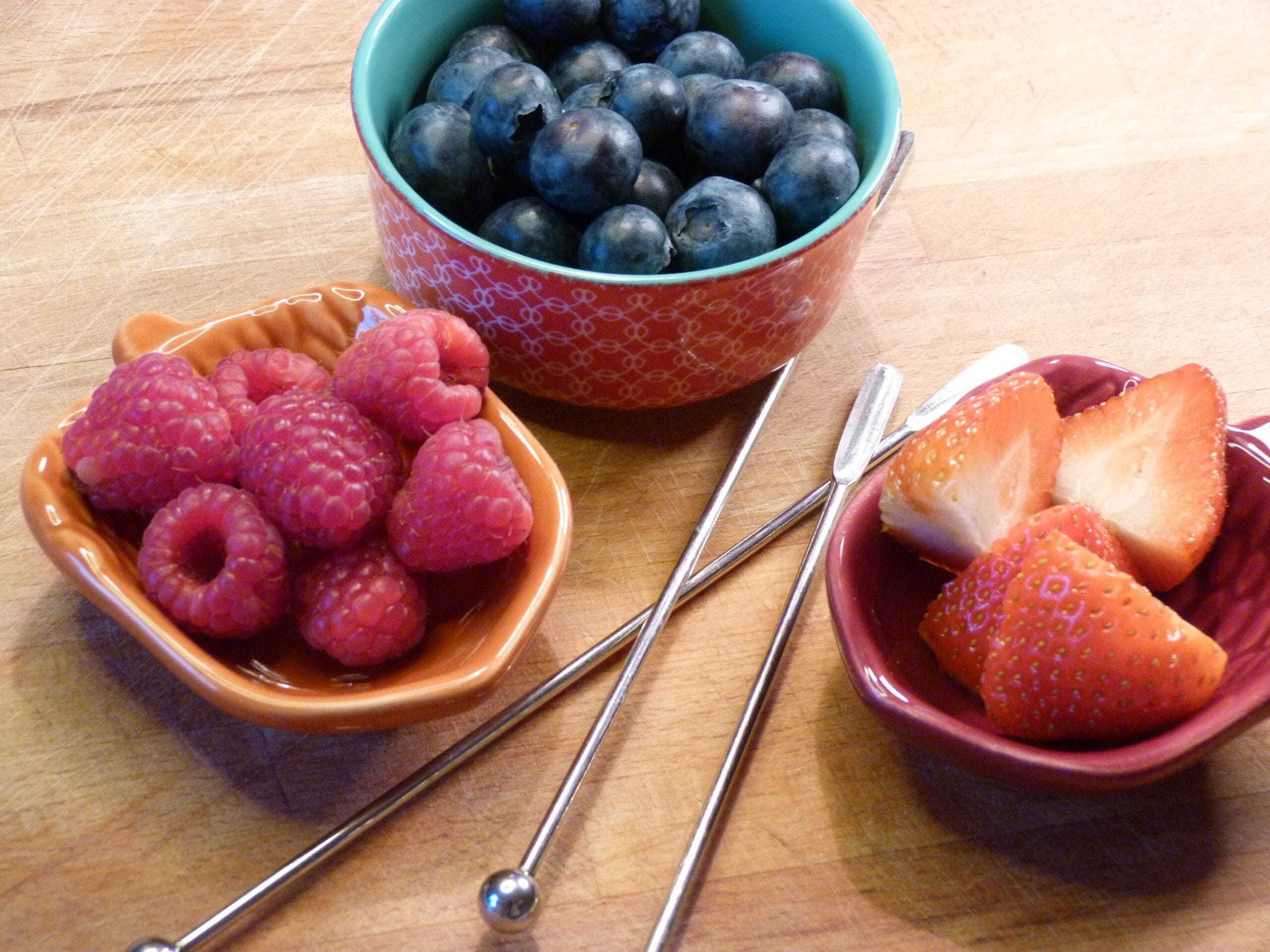
- Threading chunks of fruit onto a blunt skewer. Try our rainbow fruit kebabs — threading at its loveliest.
- Rolling dough into balls and shapes. The no-bake energy balls are made for this.
Precision and control
By Little Chef stage, your child has the strength — what they’re refining now is precision. Smaller movements, lighter pressure, more control.
- Grating cheese or carrot with supervision.
- Peeling with a swivel peeler.
- Cracking eggs into a small bowl (not the main mixture — that comes later, once a few shells have been fished out).
- Measuring with teaspoons — the small grip is exactly the same one used for holding a pencil.
- Cutting firmer veg with safe technique and good knife awareness.
- Mashing and pressing. Our no-cook banana flapjacks get plenty of mashing and pressing into the tin.
- Decorating — placing small toppings, piping icing, arranging fruit. Lovely fingertip control.
Keeping it safe (and keeping it fun)
Safety sets the tone. When children feel safe in the kitchen, they try more, focus longer, and enjoy themselves. A few things make a big difference:
- A sturdy stool with a non-slip base, so they’re at counter height and not stretching.
- A damp cloth or non-slip mat under bowls — the wobble-free bowl is a game-changer.
- Child-safe tools that fit small hands. Tools that are too big for them strain the wrist and put them off.
- Hot pans and sharp knives moved out of reach before they climb up.
And the simplest safety rule: hot, sharp, ask. If something is hot or sharp, we ask before we touch. That’s it. Easy for them to remember.
💡 The mindset that matters most
Praise effort over outcome. A wobbly slice still counts. A spilled bit of milk still counts. The win is that they tried and the muscles got the practice either way.
Fun beats perfection, every single time.
What you’ll notice over time
The lovely thing about fine motor practice in the kitchen is that the gains spill out everywhere else. Keep sessions short, keep them regular. Even just two or three little jobs a week and after a few months you’ll start to see things you didn’t expect:
- Smoother movements, lighter grip, fewer spills.
- More patience. Waiting for a whisk to foam or a pancake to cook is brilliant for self-control.
- Better pencil grip and neater colouring.
- More confidence with sticky, soft or textured foods. Sensory wins as well as motor wins.
- Calmer hands generally. They start trusting what their hands can do.
And the very best part? You’ll have a string of proud moments. Little wins they remember. Little wins you remember. Real time spent together, doing something useful, with food at the end of it.
Frequently asked questions
At what age should my child be able to hold a pencil properly?
Children develop at different rates, so age is honestly less useful than progression. Most children move from a fist grip in the toddler years, through a few transitional grips, to a proper tripod grip somewhere between 4 and 6.
If your child is older than that and still struggling, it’s worth a chat with their nursery or school SENCo, or with your GP. Griffin OT has a brilliant parent-friendly guide to pencil grips if you want to read more.
Is it normal for my four-year-old to struggle with buttons and zips?
Yes, completely. Buttons and zips need bilateral coordination — both hands working together with one doing a different job to the other — and that takes time to build.
Threading, kneading dough, twisting jar lids and using tongs in the kitchen are all brilliant for this. Little and often beats one big practice session.
How long should a kitchen session with my child actually be?
Honestly? As long as they’re interested. Five minutes counts. Twenty minutes counts. If they wander off halfway through, that’s fine — the muscles got the practice for the bit they were there.
Short and regular beats long and forced. Two or three little sessions a week will do more than one big Saturday morning marathon.
My child has additional needs. Will this still work?
This is exactly why we use Stages, Not Ages at Dinky Bakers. Children with additional needs — including those with autism, dyspraxia, sensory processing differences, or developmental delay — can absolutely benefit from kitchen activities, but the right starting point will be different for every child.
Start very small. Let them lead. If something isn’t working, change it without making a fuss. And as always, speak to your child’s OT, SENCo or therapist if you’d like specific guidance.
My child won’t touch sticky or wet food. What do I do?
That’s a sensory thing, not a fine motor thing — and it’s incredibly common. Don’t force it. Start with dry tasks (sprinkling, sorting, tearing dry herbs) and slowly introduce slightly textured ones over time.
Letting them use a spoon or tongs instead of their fingers is a brilliant workaround. They still get the fine motor practice, without the sensory discomfort.
What tools should I buy to get started?
Almost nothing. Honestly. Start with what you’ve already got — a wooden spoon, a small jug, a fork for mashing, a butter knife. Add things gradually as your child grows into them:
- A child-safe knife (nylon or serrated plastic) once they’re ready for soft chopping.
- A sturdy stool with a non-slip base.
- A small whisk that fits their hand.
- A swivel peeler with a comfy grip for Little Chefs.
You don’t need a kit. You need patience and a willingness to wipe up flour.
Will cooking really help with handwriting?
It can, yes — but indirectly. Handwriting is a complex skill that needs grip strength, finger control, bilateral coordination and visual-motor planning. Cooking helps build the foundation for all of those.
The teaspoon grip is exactly the same grip as a pencil. Pressing dough firmly works the muscles you need to press a pen on paper. Threading and pinching strengthen the small muscles in the fingertips.
It’s not a magic fix, but it’s a brilliant foundation — and far more enjoyable than worksheets.

Pick one little thing this week 💛
Pick one small kitchen job and let your child do it. Just one. Tearing the basil for dinner. Pouring milk into their own cup. Sprinkling cheese onto pasta. Threading a few chunks of fruit onto a skewer for pudding.
That’s it. Two minutes, one little job, and a small win for both of you. The next one will come more easily.
I’d love to know what you try first, come and find me on TikTok or Instagram and share your moment.
— Laura x

Ready to Cook and Learn Together?
Get the Dinky Bakers Starter Kit
Five beginner-friendly recipes with stage-by-stage job lists, conversation prompts, and parent tips — all scaffolded across Explorer, Helper and Little Chef stages. The easiest way to put fine motor practice into your week.
Get the Starter Kit → £9